
Methodology
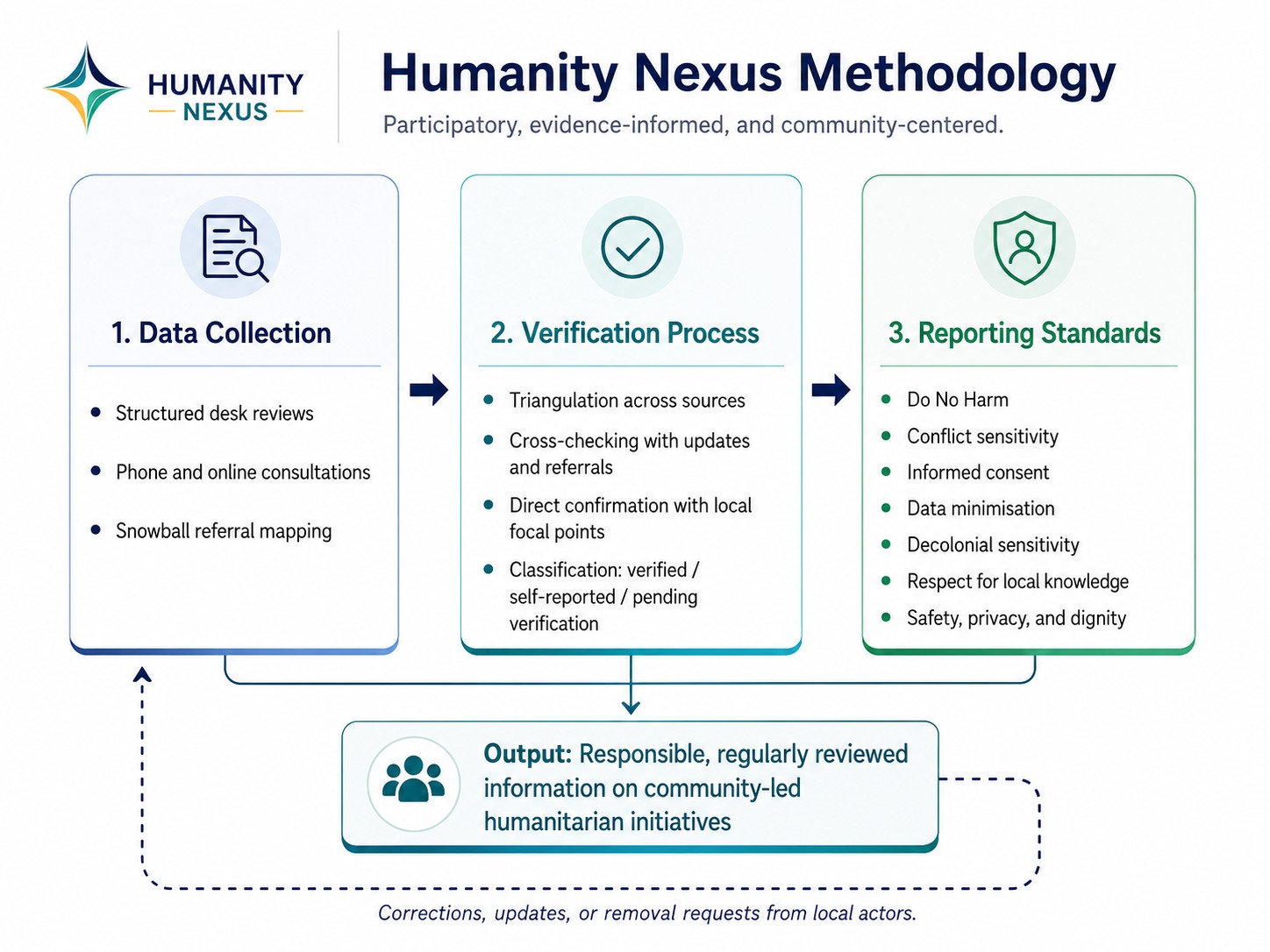
Humanity Nexus uses a participatory, evidence-informed methodology informed by the analytical and multi-stakeholder consultative approach used in OCHA's CERF Underfunded Emergencies process. Our methodology combines systematic open-source research and contextual analysis with direct engagement and locally adapted verification practices to identify, verify, and responsibly report on community-led humanitarian initiatives.

We conduct structured desk reviews of humanitarian reports, organizational websites, public databases, digital platforms, and community updates. This is complemented by phone and online consultations with humanitarian practitioners, local organizations, Emergency Response Rooms, community kitchens, volunteers, and affected communities. We also use snowball referral mapping, through which trusted local contacts help identify additional initiatives and less-visible responders operating within their networks.

Information is triangulated across multiple sources wherever possible. Publicly available data is cross-checked against recent operational updates, trusted referrals, and direct confirmation from organizational representatives or local focal points. We verify key information such as operating status, geographic coverage, services provided, and contact details. Information that cannot be sufficiently confirmed is clearly marked, withheld from publication, or referred for further review.

Our reporting is guided by Do No Harm, conflict sensitivity, data responsibility, informed consent, and respect for the safety, privacy, and dignity of affected communities. We apply the principle of data minimisation, collecting and publishing only the information necessary to support coordination and visibility. Sensitive personal, geographic, or operational information is not shared without consent and an assessment of potential risks. Information is dated, regularly reviewed, and clearly classified as verified, self-reported, or pending verification. Local actors can also correct, update, or request the removal of information relating to their work.

Our methodology is culturally sensitive and informed by Linda Tuhiwai Smith's Decolonizing Methodologies. We recognise local communities as knowledge holders and partners rather than simply sources of data. Engagement is therefore guided by respect for local customs, languages, religious practices, community structures, and appropriate forms of consent. Wherever possible, information is gathered through trusted local networks and interpreted within its historical and socio-cultural context. We avoid imposing external assumptions, extractive research practices, or representations that portray communities only through vulnerability. Instead, our work seeks to protect community ownership of knowledge and ensure that the information collected contributes to locally identified needs and priorities.